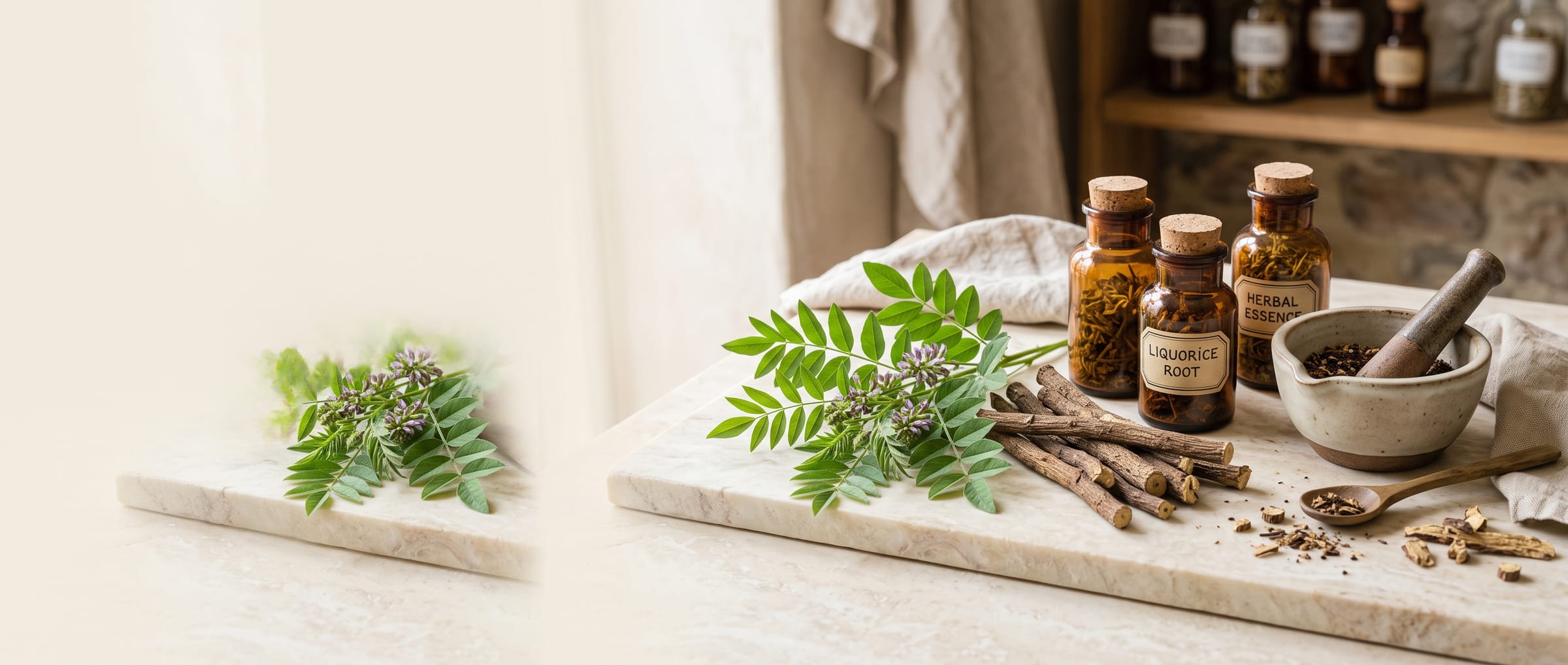
New to liquorice? Perfect.
Most people in Malaysia have never tasted real liquorice — only heard rumours about it. You arrive without habits, without expectations, and that is the best possible starting point. This page is a short, honest introduction: what liquorice actually is, why some of it is salty, and how to find the version you will love.
What liquorice actually is
Liquorice begins underground. It is the root of Glycyrrhiza glabra, an unassuming flowering plant whose long, woody roots are naturally and insistently sweet — the name itself comes from the Greek for “sweet root”. Simmered, pressed and slowly reduced, the root becomes a dense black extract, and that extract is the heart of every true liquorice sweet.
Here is the part most people never learn: many sweets sold as “liquorice” contain no liquorice at all. They are flavoured with anise — a seed that shares a similar aromatic note but none of the root’s depth. Anise gives you the aroma; real extract gives you the finish. Ours begin with real liquorice extract, and every pack declares exactly what is inside.
As for the taste — real liquorice starts quietly. Sweetness first, then a rounded, faintly herbal darkness that unfolds as you chew and lingers long after. It sits closer to espresso and dark chocolate than to ordinary candy, which is precisely why it rewards slow eating.
Four levels of darkness
Sweet, soft and beginner-friendly.
Begin here. Softer, sweeter creations for your first taste of liquorice.
Shop Gentle 02 BalancedRecognisable liquorice with accessible sweetness.
True liquorice character, rounded and easy to enjoy.
Shop Balanced 03 BoldStronger root, salt or spice character.
Deeper roots and a firmer salt edge for developing palates.
Shop Bold 04 IntenseTraditional, salty or specialist liquorice.
Created for experienced liquorice lovers. Unapologetically deep.
Shop IntenseSweet, or salty?
The sweeter side
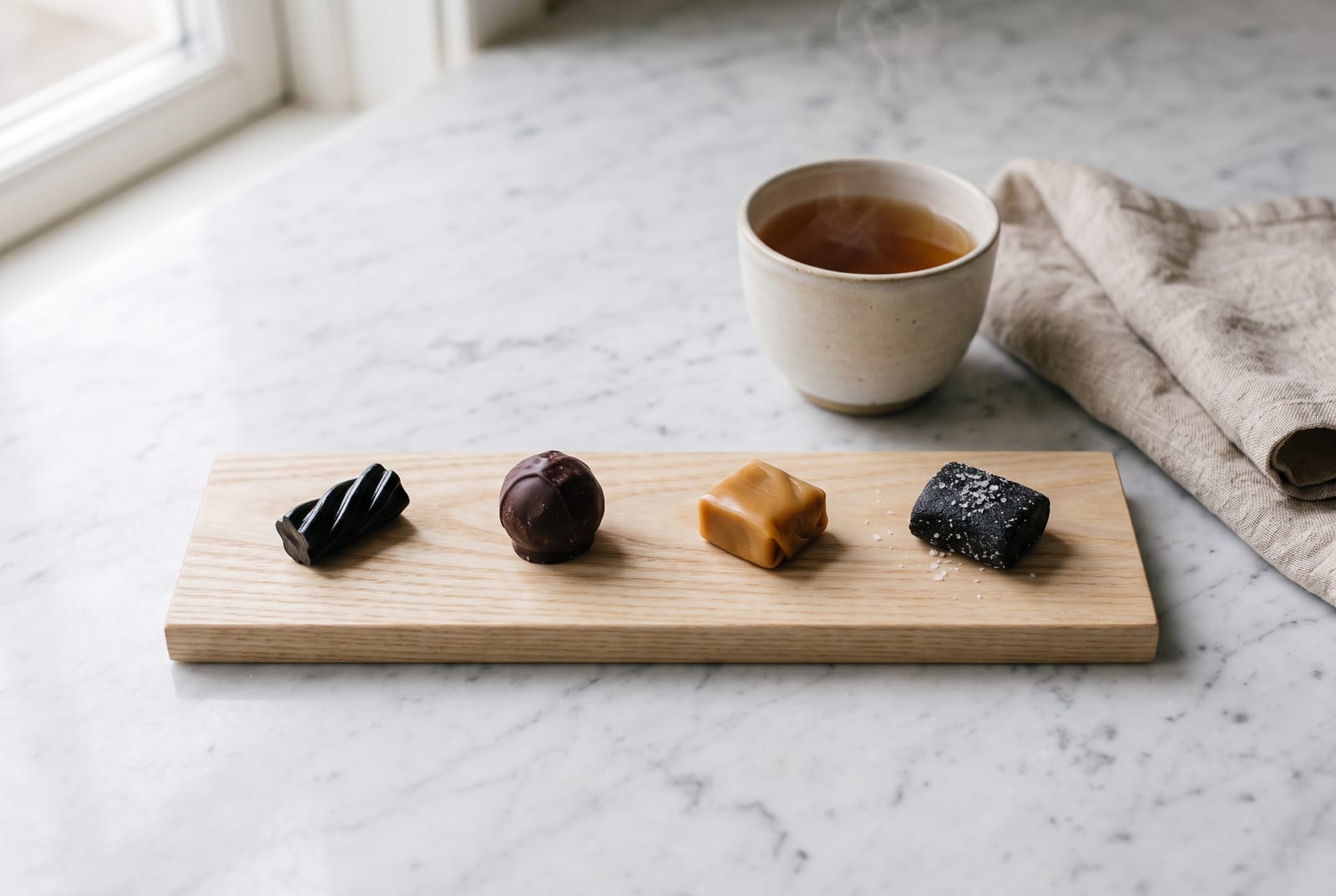
Soft textures, rounded sweetness, and liquorice in the company of things you already love — warm caramel, dark chocolate, a whisper of sea salt. This is where most Malaysian palates begin, and there is no hurry to leave.
Begin with Salted Caramel or Dark Chocolate & Sea Salt.
The saltier side
In Northern Europe, salt is what liquorice grew up with. A firm mineral edge sharpens the root’s sweetness and doubles its depth. It is a taste with its own devoted following — some arrive here after months of curiosity, and few ever leave.
When you are ready, Salty Black is waiting.
How to taste liquorice
- Look. Good liquorice is matte, dark and dense. Notice the cut surface — chocolate shell, caramel seam, or pure black centre.
- Chew slowly. Texture arrives first, flavour second. Rushing liquorice is like gulping espresso — you get the bitterness and miss the rest.
- Note the finish. Liquorice is a long flavour. What lingers after you swallow tells you the true intensity — and whether you want to go deeper.
- Rest between tastes. A sip of water, tea or black coffee resets the palate. Then move one step up the scale.
Taste the whole spectrum.
The Discovery Box holds all four intensities in a deliberate order, with a tasting card to guide the way. Begin gentle, finish intense, and find where your taste lives.
Explore the Discovery Box